Categoria: Sem categoria

  • “From Frustration to Success: The Power of Patience in Your Fitness Journey”

    “From Frustration to Success: The Power of Patience in Your Fitness Journey”

    When it comes to achieving fitness goals, patience is key. We live in a world of instant gratification, but the reality is that building a strong and healthy body takes time and effort. In this article, we will discuss the importance of patience in achieving fitness goals and provide some tips and suggestions based on trusted sources and references.

    The first thing to understand is that fitness is a journey, not a destination. You will not achieve your fitness goals overnight, and it is important to recognize that progress is not always linear. There will be setbacks and plateaus along the way, but with patience and persistence, you can overcome these obstacles and continue to make progress towards your goals.

    One of the biggest mistakes people make when it comes to fitness is setting unrealistic expectations for themselves. It is important to set goals that are challenging but achievable. This will help you stay motivated and focused on your progress, rather than feeling discouraged by what you have not yet accomplished.

    Another important factor in achieving fitness goals is consistency. You must be consistent in your workouts and your nutrition in order to see results. This means sticking to a workout routine and eating a healthy, balanced diet consistently over time. Consistency is key, and it takes patience to develop these habits and stick to them.

    In addition to consistency, it is important to have a positive mindset when it comes to fitness. This means focusing on what you can do, rather than what you cannot do. It means celebrating your small victories along the way, and recognizing that progress, no matter how small, is still progress. A positive mindset will help you stay motivated and committed to your goals, even when the going gets tough.

    Why is patience so important in fitness? There are several reasons. Firstly, the human body is complex and it takes time to adapt to new stimuli. Whether you are trying to build muscle, improve your endurance, or lose weight, your body needs time to adjust to the new demands you are placing on it.

    Secondly, fitness is a journey, not a destination. It is not just about achieving a certain weight or body shape, but also about developing healthy habits that will serve you for a lifetime. This requires patience and persistence to develop new habits and to stick with them over time.

    Here are some tips and suggestions to help you cultivate patience and achieve your fitness goals:

    1. Set Realistic Goals

    It is important to set goals that are challenging but achievable. Setting unrealistic expectations for yourself can lead to disappointment and frustration. Instead, set specific, measurable goals that are within your reach. For example, instead of aiming to lose 20 pounds in a month, aim to lose 1-2 pounds per week.

    1. Focus on Progress, Not Perfection

    Fitness is not a linear process. You will experience setbacks, plateaus, and days when you just don’t feel like working out. It is important to focus on your progress, no matter how small, and celebrate your victories along the way. Whether it’s lifting a little more weight, running a little farther, or eating a little healthier, every small step forward counts.

    1. Be Consistent

    Consistency is key when it comes to achieving fitness goals. You must be consistent in your workouts, your nutrition, and your recovery in order to see results. This means sticking to a workout routine, eating a healthy, balanced diet, and prioritizing rest and recovery consistently over time.

    1. Practice Self-Care

    Taking care of your mental and emotional health is just as important as taking care of your physical health. Practice self-care by getting enough sleep, managing stress, and engaging in activities that bring you joy and relaxation.

    1. Find a Support System

    Having a support system can make all the difference when it comes to achieving your fitness goals. Surround yourself with people who encourage and motivate you, whether it’s a workout buddy, a coach, or a group fitness class.

    In conclusion, patience is a crucial component of achieving your fitness goals. Set realistic goals, focus on your progress, and prioritize consistency, self-care, and support. Remember, fitness is a journey, not a destination, and with patience and persistence, you can build a strong and healthy body that will serve you well for a lifetime. Don’t give up when progress seems slow or when setbacks occur. Keep going, stay consistent, and trust in the process. With time and patience, you will see the results you are looking for.

    It is important to note that patience does not mean complacency. You should still push yourself to improve and challenge yourself within your capabilities. However, it is important to recognize that progress may not always come as quickly as you want it to, and that is okay. Enjoy the journey and focus on developing sustainable, healthy habits that will serve you well in the long term.

    Remember that fitness is not just about achieving a certain body type or weight. It is about taking care of your body and your health, both physical and mental. So, be kind to yourself, stay patient, and enjoy the journey towards a healthier, happier you.

    In summary, building a healthy and fit body requires patience, persistence, and consistency. Set realistic goals, focus on progress, practice self-care, and find a support system to help you on your journey. And remember, fitness is a journey, not a destination. Enjoy the process, stay patient, and trust in the progress you are making.

  • Quanto tempo leva para construir músculos?

    Quanto tempo leva para construir músculos?

    Quer você tenha acabado de pisar na academia pela primeira vez ou esteja treinando há anos, todo mundo quer saber como construir músculos mais rapidamente.

    No entanto, o crescimento muscular pode ser lento e requer muito esforço consistente e disciplinado para ver os resultados.

    Para muitas pessoas, o tempo que leva para ver mudanças mínimas as impede de seguir suas rotinas. Além disso, vivemos em uma sociedade de gratificação instantânea, então esperar meses ou até anos para progredir parece estranho para muitos fisiculturistas iniciantes.

    No entanto, para aqueles que persistem, resultados excelentes virão. O músculo é construído através de ação contínua e nutrição adequada.

    Pode ser difícil saber quando ocorrerão mudanças visíveis. Então, para quem quer ter uma ideia melhor de quando deve esperar resultados, é importante observar quanto tempo deve levar para construir músculos.

    Então, quanto tempo leva para construir músculos?

    Muitos fatores podem influenciar a rapidez com que o músculo cresce, incluindo:

    Dieta

    Dormir

    Exercício

    Idade

    A dieta é fundamental na construção muscular; se faltar proteína em sua dieta, você descobrirá que levará mais tempo para construir músculos. Isso ocorre porque os aminoácidos encontrados nas proteínas são usados ​​para reparar os músculos após o treino. É este processo de reparação que aumenta o tamanho.

    Além disso, sua rotina de ginástica também influenciará a taxa na qual você constrói músculos. Ao tentar construir músculos rapidamente, você precisa colocar um volume de alto estresse em seus músculos.

    Mas não se trata apenas do quanto você trabalha na academia – se você é novo, pode achar fácil construir músculos inicialmente. Quanto mais você frequenta a academia, mais perto fica de todo o seu potencial genético, o que significa que demora mais para ver os resultados.

    Por fim, a idade afeta a rapidez com que seus músculos crescerão, já que a maioria dos homens terá níveis mais baixos de testosterona à medida que envelhecem. Esse hormônio é vital para a massa muscular, portanto, ter menos significa que você precisará trabalhar mais por mais tempo para obter resultados.

    Todos esses fatores e variáveis ​​influenciam o quão rápido ou lento você constrói músculos. Supondo que todos os aspectos sejam ideais, você começará a ver os resultados após 6 semanas de seguir um programa consistente.

    É uma boa ideia acompanhar seu progresso com fotos semanais; dessa forma, você pode ver as mudanças conforme elas acontecem.

    COMO VOCÊ PODE ACELERAR O CRESCIMENTO MUSCULAR…

    Suponha que você esteja tentando ganhar massa muscular em uma data específica, como férias na praia ou uma competição de fisiculturismo.

    Nesse caso, você pode estar pensando nas coisas extras que pode fazer para ajudá-lo a acelerar o processo e garantir que você pareça levantado quando quiser.

    É tudo uma questão de focar nas coisas que já sabemos que terão um impacto…

    A IMPORTÂNCIA DA DIETA PARA GANHAR MÚSCULOS

    Em termos de sua dieta, você deve buscar um excesso de calorias para construir músculos mais rapidamente. Embora isso possa parecer assustador para quem procura um físico definido e esguio, estar em déficit calórico dificulta o crescimento muscular. Seu corpo não vai querer adicionar mais massa se achar que a comida está em falta.

    Para garantir que as calorias extras que você consome contribuam para o músculo e não para a gordura, tente garantir que suas calorias extras venham principalmente de proteínas. Em uma dieta rica em proteínas, cerca de 45% das calorias são armazenadas como músculo, o que pode ser a diferença entre você construir músculos rapidamente ou não.

    A IMPORTÂNCIA DE USAR ESTÍMULOS DIFERENTES

    Você deve se concentrar na fase excêntrica de seus treinos. Isso faz parte de seus movimentos em que seus músculos estão se alongando, em oposição aos movimentos concêntricos em que seus músculos estão se contraindo. Estudos mostraram que focar nessa parte de seus movimentos pode ajudá-lo a construir músculos mais rapidamente.

    Assim, em uma simples rosca bíceps, puxar o peso em sua direção é contrair seu músculo, portanto, concêntrico, enquanto trazer o peso de volta para baixo é a parte excêntrica da rotina.

    Para focar na sua fase excêntrica, você deve desacelerar os movimentos. Por exemplo, tente aumentar o peso de forma explosiva com a rosca bíceps e, em seguida, retorne-o lentamente.

    Você também pode optar por realizar exercícios apenas excêntricos. Ao fazer isso, pode ser necessário aumentar o peso, pois os músculos são tipicamente mais robustos ao alongar.

    Você também pode alterar sua rotina para construir músculos mais rapidamente, garantindo um período de descanso menor entre as séries.

    Ao dar a si mesmo não mais do que 90 segundos entre as séries, você incentiva uma liberação rápida de hormônios de construção muscular, garantindo que seus músculos estejam genuinamente cansados, o que significa que eles se recuperarão mais fortes.

    O CRESCIMENTO MUSCULAR É UMA MARATONA, NÃO UMA CORRIDA

    Ao trabalhar duro para construir seus músculos, será necessário um esforço substancial. Em vez disso, você deve esperar dedicar muito tempo e esforço antes de ver qualquer aparência dos resultados que procura.

    Levando cerca de seis semanas, dependendo de sua programação e dieta, para começar a ver as diferenças, pode dar muito trabalho para se manter motivado.

    Felizmente, as recompensas podem mudar sua vida se você passar por esses primeiros dias difíceis.

    Você pode atingir seus objetivos corporais de longo prazo se tiver uma rotina consistente de ginástica, uma dieta nutritiva e dormir bastante.

  • How long does it take to build muscle?

    How long does it take to build muscle?

    Whether you have just stepped foot in the gym for the first time or you’ve been training for years, everyone wants to know how to build muscles more quickly. 

    However, muscle growth can be slow and requires a lot of consistent and disciplined effort to see results. 

    For many people, the time it takes to see minimal changes deters them from sticking with their routines. In addition, we live in a society of instant gratification, so waiting months or even years for progress feels alien to many first-time bodybuilders.

    However, for those that stick with it, outstanding results will come. Muscle is built through continuous action and proper nutrition. 

    It can be tough to know when visible changes will occur. So, for those who want a better idea of when they should expect results, it is important to note how long it should take to build muscles. 

    So, how long does it take to build muscle? 

    Many factors can influence how quickly muscle grows, including:

    • Diet
    • Sleep
    • Exercise
    • Age

    Diet is key in building muscle; if you lack protein in your diet, you’ll find it will take longer to build muscle. This is because the amino acids found in protein are used to repair your muscles after working out. It’s this repairing process that increases the size. 

    In addition, your gym routine will also influence the rate at which you build muscle. When trying to build muscle fast, you need to aim to put a high-stress volume on your muscles. 

    But it’s not just about how hard you work in the gym – if you’re new, you might find it easy to build muscle initially. The more you’ve been to the gym, the closer you are to your full genetic potential, meaning it takes longer to see results.

    Finally, age impacts how quickly your muscles will grow, as most men will have lower testosterone as they age. This hormone is vital for muscle mass, so having less of it means you’ll need to work harder for longer to get results.

    All these factors and variables influence how fast or slow you build muscle. Assuming all aspects are optimal, you will start seeing results after 6-weeks of following a consistent program.

    It’s a good idea to track your progress with weekly photos; that way, you can see the changes as they happen.

    HOW CAN YOU ACCELERATE MUSCLE GROWTH…

    Suppose you’re trying to pack on the muscle by a specific date, such as for a beach holiday or a bodybuilding competition. 

    In that case, you may be thinking about the extra things you can do to help you speed up the process and ensure that you look jacked by the time you want to. 

    It’s all about focussing on the things we already know are going to have an impact…

    THE IMPORTANCE OF DIET FOR BUILDING MUSCLE

    In terms of your diet, you should aim to be in a calorie surplus to build muscle quicker. Although this may sound scary for those looking for a cut and lean physique, being in a calorie deficit makes muscle growth hard. Your body will not want to add more mass if it thinks food is in short supply. 

    To ensure that the extra calories you consume contribute to muscle and not fat, try to ensure that your extra calories come primarily from protein. In a diet rich in protein, about 45% of the calories are stored as muscle, which could be the difference between you building muscle quickly or not.

    THE IMPORTANCE OF USING DIFFERENT STIMULUS

    You should focus on the eccentric phase of your workouts. This is part of your movements where your muscles are lengthening, as opposed to concentric movements where your muscles are instead contracting. Studies have shown that focusing on this part of your motions can help you build muscle faster. 

    So, in a simple bicep curl, pulling the weight towards you is contracting your muscle, thus concentric, while bringing the weight back down is the eccentric part of the routine.

    To focus on your eccentric phase, you should slow down the movements. For example, try to bring the weight up explosively with the bicep curl and then return it down slowly. 

    You could also choose to perform exercises that are eccentric only. When doing this, you may need to increase the weight, as muscles are typically more robust when lengthening.

    You could also alter your routine to build muscle faster by ensuring a decreased rest period between sets. 

    By giving yourself no more than 90 seconds between sets, you encourage a quick release of muscle-building hormones while ensuring that your muscles are genuinely tired, meaning they’ll recover stronger. 

    MUSCLE GROWTH IS A MARATHON, NOT A SPRINT

    When working hard to build your muscles, it’s going to take a substantial effort. Instead, you should expect to commit a lot of time and effort before seeing any semblance of the results you’re after. 

    With it taking about six weeks, depending on your schedule and diet, to start seeing differences, it can take a lot of work to stay motivated. 

    Thankfully, the rewards can be life-changing if you push through these difficult early days. 

    You can smash your long-term body goals if you have a consistent gym routine, a nutritious diet, and get plenty of sleep.

  • The reason you should eat more like the Mediterranean Diet

    The reason you should eat more like the Mediterranean Diet

    A Mediterranean diet can help fight against overweight, heart disease, certain cancers, diabetes, and cognitive decline. Here’s how to make the switch.

    What is a “Mediterranean diet?”

    When you think about Mediterranean food, your mind may go to pizza and pasta from Italy, or lamb chops from Greece, but these dishes don’t fit into the healthy dietary plans advertised as “Mediterranean.” A true Mediterranean diet is based on the region’s traditional fruits, vegetables, beans, nuts, seafood, olive oil, and dairy—with perhaps a glass or two of red wine. That’s how the inhabitants of Crete, Greece, and southern Italy ate circa 1960, when their rates of chronic disease were among the lowest in the world and their life expectancy among the highest, despite having only limited medical services.

    And the real Mediterranean diet is about more than just eating fresh, wholesome food. Daily physical activity and sharing meals with others are vital elements. Together, they can have a profound effect on your mood and mental health and help you foster a deep appreciation for the pleasures of eating healthy and delicious foods.

    Of course, making changes to your diet is rarely easy, especially if you’re trying to move away from the convenience of processed and takeout foods. But the Mediterranean diet can be an inexpensive as well as a satisfying and very healthy way to eat. Making the switch from pepperoni and pasta to fish and avocados may take some effort, but you could soon be on a path to a healthier and longer life.

    Health benefits of a Mediterranean diet
    A traditional Mediterranean diet consisting of large quantities of fresh fruits and vegetables, nuts, fish, and olive oil—coupled with physical activity—can reduce your risk of serious mental and physical health problems by:

    You will burn more fat and build up more muscle mass. As you will consume a range of foods that fight the generalized inflammation of our body’s functioning, our body will be more efficient in burning fat and building more muscle mass. You will consume foods rich in protein, good sources of fat and high quality carbohydrates. You will feel less hungry, more willing and consequently you will notice the result in your physique after a few weeks of following this lifestyle.

    Preventing heart disease and strokes. Following a Mediterranean diet limits your intake of refined breads, processed foods, and red meat, and encourages drinking red wine instead of hard liquor—all factors that can help prevent heart disease and stroke.

    Keeping you agile. If you’re an older adult, the nutrients gained with a Mediterranean diet may reduce your risk of developing muscle weakness and other signs of frailty by about 70 percent.

    Reducing the risk of Alzheimer’s. Research suggests that the Mediterranean diet may improve cholesterol, blood sugar levels, and overall blood vessel health, which in turn may reduce your risk of Alzheimer’s disease or dementia.

    Halving the risk of Parkinson’s disease. The high levels of antioxidants in the Mediterranean diet can prevent cells from undergoing a damaging process called oxidative stress, thereby cutting the risk of Parkinson’s disease in half.

    Increasing longevity. By reducing your risk of developing heart disease or cancer with the Mediterranean diet, you’re reducing your risk of death at any age by 20%.

    Protecting against type 2 diabetes. A Mediterranean diet is rich in fiber which digests slowly, prevents huge swings in blood sugar, and can help you maintain a healthy weight.

    Myths and facts about the Mediterranean diet

    Following a Mediterranean diet has many benefits, but there are still a lot of misconceptions on exactly how to take advantage of the lifestyle to lead a healthier, longer life. The following are some myths and facts about the Mediterranean diet.

    Myths and facts of a Mediterranean diet
    Myth 1: It costs a lot to eat this way. Fact: If you’re creating meals out of beans or lentils as your main source of protein, and sticking with mostly plants and whole grains, then the Mediterranean diet is less expensive than serving dishes of packaged or processed foods.
    Myth 2: If one glass of wine is good for your heart, then three glasses is three times as healthy. Fact: Moderate amounts of red wine (one drink a day for women; two for men) certainly has unique health benefits for your heart, but drinking too much has the opposite effect. Anything more than two glasses of wine can actually be bad for your heart.
    Myth 3: Eating large bowls of pasta and bread is the Mediterranean way. Fact: Typically, Mediterraneans don’t eat a huge plate of pasta the way Americans do. Instead, pasta is usually a side dish with about a 1/2-cup to 1-cup serving size. The rest of their plate consists of salads, vegetables, fish or a small portion of organic, grass-fed meat, and perhaps one slice of bread.
    Myth 4: The Mediterranean diet is only about the food. Fact: The food is a huge part of the diet, yes, but don’t overlook the other ways the Mediterraneans live their lives. When they sit down for a meal, they don’t sit in front of a television or eat in a rush; they sit down for a relaxed, leisurely meal with others, which may be just as important for your health as what’s on your plate. Mediterraneans also enjoy plenty of physical activity.

    How to make the change

    If you’re feeling daunted by the thought of changing your eating habits to a Mediterranean diet, here are some suggestions to get you started:

    Eat lots of vegetables. Try a simple plate of sliced tomatoes drizzled with olive oil and crumbled feta cheese, or load your thin crust pizza with peppers and mushrooms instead of sausage and pepperoni. Salads, soups, and crudité platters are also great ways to load up on vegetables.

    Always eat breakfast. Fruit, whole grains, and other fiber-rich foods are a great way to start your day, keeping you pleasantly full for hours.

    Eat seafood twice a week. Fish such as tuna, salmon, herring, sablefish (black cod), and sardines are rich in omega-3 fatty acids, and shellfish like mussels, oysters, and clams have similar benefits for brain and heart health.

    Cook a vegetarian meal one night a week. If it’s helpful, you can jump on the “Meatless Mondays” trend of foregoing meat on the first day of the week. Or simply pick a day where you build meals around beans, whole grains, and vegetables. Once you get the hang of it, try two nights a week.

    Enjoy dairy products in moderation. The U.S. Department of Agriculture (USDA) recommends limiting saturated fat to no more than 10% of your daily calories (about 200 calories for most people). That still allows you to enjoy dairy products such as natural (unprocessed) cheese and Greek or plain yogurt.

    For dessert, eat fresh fruit. Instead of ice cream, cake or other baked goods, opt for strawberries, fresh figs, grapes, or apples.

    Use good fats. Extra-virgin olive oil, nuts, sunflower seeds, olives, and avocados are great sources of healthy fats for your daily meals.

    What to do about mercury in fish

    Despite all the health benefits of seafood, nearly all fish and shellfish contain traces of pollutants, including the toxic metal mercury. These guidelines can help you make the safest choices.

    • The concentration of mercury and other pollutants increases in larger fish, so it’s best to avoid eating large fish like swordfish, tilefish, and king mackerel.
    • Most adults can safely eat about 12 ounces (two 6-ounce servings) of other types of cooked seafood a week.
    • Pay attention to local seafood advisories to learn if fish you’ve caught is safe to eat.
    • For women who are pregnant, nursing mothers, and children aged 12 and younger, choose fish and shellfish that are lower in mercury, such as shrimp, canned light tuna, salmon, Pollock, or catfish. Because of its higher mercury content, eat no more than 6 ounces (one average meal) of albacore tuna per week.

    Make mealtimes a social experience

    The simple act of talking to a friend or loved over the dinner table can play a big role in relieving stress and boosting mood. Eating with others can also prevent overeating, making it as healthy for your waistline as it is for your outlook. Switch off the TV and computer, put away your smartphone, and connect to someone over a meal.

    Gather the family together and stay up to date with each other’s daily lives. Regular family meals provide comfort to kids and are a great way to monitor their eating habits as well.

    Share meals with others to expand your social network. If you live alone, cook a little extra and invite a friend, coworker, or neighbor to join you.

    Cook with others. Invite a friend to share shopping and cooking responsibilities for a Mediterranean meal. Cooking with others can be a fun way to deepen relationships and splitting the costs can make it cheaper for both of you.

    Quick start to a Mediterranean diet

    The easiest way to make the change to a Mediterranean diet is to start with small steps. You can do this by:

    • Sautéing food in olive oil instead of butter.
    • Eating more fruits and vegetables by enjoying salad as a starter or side dish, snacking on fruit, and adding veggies to other dishes.
    • Choosing whole grains instead of refined breads, rice, and pasta.
    • Substituting fish for red meat at least twice per week.
    • Limit high-fat dairy by switching to skim or 1% milk from 2% or whole milk

    You can get a guide to help you get the most benefit from this lifestyle through my 10-Day Mediterranean Diet Detox Plan. It will be a follow-up directly with me to help you achieve the best version of your physique. Very soon I will be talking more about this.

  • How to stay on track with the Diet on the weekends

    How to stay on track with the Diet on the weekends

    Healthy eating and exercise habits are usually on auto-pilot throughout the workweek, but Friday comes around and many of us tend to let loose by having one too many cocktails, indulging in brunch or other restaurant meals, sleeping in and skipping our workouts. Sound like you? Here are my best tips for how to stay on track over the weekend!

    I’m not saying that there isn’t room for some splurges and treats, but it’s important to keep your health goals in mind when making choices over the weekend. Since it is Friday and this is weighing (pun intended) heavy on my mind I thought I would share a few tips for how to stay on track over the weekend… while still enjoying yourself.

    1.   Stay focused and keep with your normal routine – One of the big things that throws us off on the weekend is lack of routine or structure. If that’s the case for you, come up with a weekend routine. Of course, there will be weekends where you don’t follow the routine exactly, but it can be so helpful to add some structure to your weekends. A few ideas: plan to take a specific group fitness class every Saturday morning, have family dinner and board game night on Saturday, carve out a few hours every Sunday for meal prep, have a set time for dinner and go to bed at the same time you normally do during the week.

    2.   Limit your alcohol – A lot of people use alcohol as a way to relax and socialize on the weekends. Having a drink here and there is totally fine, but it’s super important to find other ways to relax and decompress. A few ideas: exercise, catch up with an old friend, read a book at a cozy coffee shop, take a bath, schedule a manicure or a massage. Of course if you do plan to indulge in a few alcoholic beverages, it’s best to drink water or another calorie-free beverage between drinks and don’t get so tipsy that you throw caution to the wind about what’s going into your mouth. I know we all hate this one, but it’s true: studies show that one of the top sources of extra weekend calories is alcohol, so it pays to scale back.

    3.   Eat a healthy breakfast – This is one of my favorite tips for any day of the week! A healthy breakfast starts your metabolism, helps to control your appetite all day and sets the foundation for how the rest of the day will play out. 

    4.   Stay focused and keep with your normal routine – One of the big things that throws us off on the weekend is lack of routine or structure. If that’s the case for you, come up with a weekend routine. Of course, there will be weekends where you don’t follow the routine exactly, but it can be so helpful to add some structure to your weekends. A few ideas: plan to take a specific group fitness class every Saturday morning, have family dinner and board game night on Saturday, carve out a few hours every Sunday for meal prep, have a set time for dinner and go to bed at the same time you normally do during the week.

    5.   Limit your alcohol – A lot of people use alcohol as a way to relax and socialize on the weekends. Having a drink here and there is totally fine, but it’s super important to find other ways to relax and decompress. A few ideas: exercise, catch up with an old friend, read a book at a cozy coffee shop, take a bath, schedule a manicure or a massage. Of course if you do plan to indulge in a few alcoholic beverages, it’s best to drink water or another calorie-free beverage between drinks and don’t get so tipsy that you throw caution to the wind about what’s going into your mouth. I know we all hate this one, but it’s true: studies show that one of the top sources of extra weekend calories is alcohol, so it pays to scale back.

    6.   Eat a healthy breakfast – This is one of my favorite tips for any day of the week! A healthy breakfast starts your metabolism, helps to control your appetite all day and sets the foundation for how the rest of the day will play out. 

    7.   Take advantage of weekend farmers markets – I might be a dork, but going to the farmers market on Saturday morning with Isaac and Olive is one of my weekend highlights. Farmers markets are normally filled with healthy food choices and make for a fun weekend activity.

    8.   Beware of free food – Often times free food (like pizza and cake at a birthday party or random grocery store samples) can sabotage your efforts to cut out the junk food and sidetrack your goal to make healthier choices. For whatever reason we feel this intense need to eat it because it’s free! By only eating food you buy for yourself, it will help you stay clear of the temptations. Sometimes I’m a sucker for the free samples at Whole Foods, but overall it’s best to avoid them. Most of the time they aren’t the healthiest of foods and who knows how long they’ve been sitting out or how many people have touched them. When you think about it this way, the free food is way less appetizing.

    9.    Move more – Make the most of the extra free time you have on the weekend and try to squeeze in some sort of workout or physical activity. Getting your friends and family involved in something outdoors can be a fun way to get moving! And remember, exercise doesn’t have to mean going to the gym — walking, hiking, playing sports, gardening, cleaning the house and mowing the grass are all forms of physical activity.

    10. Use your weekend to plan for the week ahead – The weekends are a great time to plan your healthy meals for the week ahead. 

    11. Moderation is key – Eat and enjoy your favorite foods in moderation. Deprivation tends to backfire so if you really want a treat, eat and enjoy it and then move on.

  • Os 5 princípios para queimar gordura sem perder músculos

    Os 5 princípios para queimar gordura sem perder músculos

    A gordura tende a se acumular em seu corpo gradualmente quando você menos espera. E isso pode acontecer até quando você está tentando ganhar massa. Na verdade, é quase certo que você engordará se não tomar cuidado.

    Mas assim como você o acumulou, você também pode se livrar dela. Siga estes cinco princípios e você será capaz de cortar gordura enquanto mantém seu músculo suado e mantém seu alto nível de autoconfiança.

    1. Faça intervalos de sprint

    Se você quer mesmo cortar gordura sem perder músculos, então você precisa se levantar e fazer intervalos de sprint. Porque? Porque os intervalos de sprint fazem coisas mágicas com o seu corpo que nada mais faz. Hahah… Sério.

    Primeiro, você queima uma quantidade imensa de calorias, que derrete a gordura bem diante de seus olhos. Em segundo lugar, você aumenta seu metabolismo ao máximo, o que tem um enorme efeito de transição horas depois de terminar o treino.

    Por fim, você obtém uma pequena liberação de hormônio do crescimento e testosterona. A otimização hormonal por meio do treinamento é um dos maiores segredos que você deve explorar em qualquer chance que tiver. Use sprints como canal!

    1. Levante peso e faça exercícios compostos

    Ao levantar pesos pesados, você maximiza o recrutamento muscular e aumenta a frequência cardíaca. Mais calorias queimadas, além de levantar pesos pesados, leva a ganhos de tamanho durante a queima de gordura.

    Exercícios compostos são suas melhores conexões para maximizar este princípio porque requerem o uso de múltiplas articulações e músculos trabalhando em uníssono. Isso lhe dá a capacidade de levantar mais metal do chão. Mais uma vez, você terá um bom chute nas calças hormonais fazendo esses exercícios.

    1. Leve o seu sono a sério.

    Treinar demais e privar-se do sono tão necessário é a coisa mais estúpida que você pode fazer. Vejamos o que acontece quando você dorme.

    Depois de um sono profundo durante a noite, seu corpo libera hormônio do crescimento e testosterona, o que ajuda na recuperação. Na verdade, é quando você constrói músculos. Está tudo bem, mas há mais na história.

    Outro fenômeno ocorre enquanto você dorme. Existem dois hormônios famosos que seu corpo usa para supressão e estimulação do apetite. Eles são chamados de leptina e grelina, respectivamente.

    Se você acha que consegue sobreviver com quatro horas de sono e ainda funcionar no dia seguinte, está redondamente enganado. Isso não apenas interromperá suas recuperações musculares, mas também perturbará o equilíbrio de leptina e grelina do seu corpo.

    Isso significa que você corre o risco de comer demais no dia seguinte e não se sentir satisfeito quando deveria desistir. Se a leptina e a grelina estão fora de sintonia, você acabou de adicionar mais um motivo para o seu corpo reter a gordura armazenada – ou, pior, ganhar mais!

    Procure dormir sete horas por noite para evitar que isso ocorra.

    1. Pare de beber álcool.

    Nada adicionará camadas de gordura ao seu corpo mais rápido do que consumir muitas bebidas alcoólicas.

    Se cortar gordura enquanto mantém os músculos é realmente o seu objetivo, então desista de beber ou corte o caminho para trás. A ingestão excessiva de álcool leva a um metabolismo reduzido, ganho de peso de calorias vazias e níveis de testosterona embotados. Na verdade, não tenho certeza se há algo pior do que isso para ganho de gordura e perda de massa muscular.

    Em vez disso, fique com água. Isso não apenas manterá seus músculos hidratados e parecendo gordos, mas também eliminará as toxinas do seu sistema. Para melhores resultados, beba água como sua única bebida.

    1. Pratique o jejum

    Você provavelmente não esperava por isso, mas é mais um daqueles segredos que você precisa saber. Você sabe o que acontece quando você se exercita em um estado de jejum completo? Seu corpo passa por um despejo de hormônios porque está sendo enganado pensando que está morrendo de fome.

    Na realidade, você não está morrendo de fome. Você está simplesmente em um estado de jejum. Você não vai morrer e não vai “queimar” seu músculo armazenado. Isso é um absurdo completo. Na verdade, você teria que jejuar por vários dias, se não semanas, antes que seus músculos começassem a evaporar.

    O oposto é realmente verdadeiro. Quando você jejua e depois se exercita, seu corpo libera uma tonelada de hormônio do crescimento e testosterona. Dependendo da intensidade do seu treino, você provavelmente queimará uma mistura de carboidratos e gordura armazenados para obter energia.

    O resultado é mais músculo ganho, mais gordura queimada e mais ondulações em seu corpo. Isso pode ser um pouco desafiador no começo, mas você pegará o jeito depois de um tempo.

    Conclusão

    Se você estiver disposto a experimentar coisas novas e ir além, obterá grande sucesso na queima de gordura sem perder músculos. Apenas lembre-se de ser paciente e nunca desanimar. Se você tiver um dia ruim, supere-o, siga em frente, pois no dia seguinte você uma outra oportunidade. Constância é a chave para bons resultados.

  • The 5 Principles Of Cutting Fat Without Losing Muscle

    The 5 Principles Of Cutting Fat Without Losing Muscle

    Fat is very sneaky. It tends to build up in your body gradually when you’re least expecting it. This holds especially true when you’re trying to pack on mass. In fact, you are almost guaranteed to put on some fat if you’re not careful.

    But just as you accumulated it, you can also get rid of it. Follow these five principles and you’ll be able to cut fat while keeping your hard-earned muscle and maintaining your high level of self-confidence.

    1. Perform sprint intervals

    If you’re serious about cutting fat without losing muscle, then you need to get up and do sprint intervals. Why? Because sprint intervals do magical things to your body that nothing else does. Hahah…Seriously.

    First, you burn an immense number of calories, which melts fat right before your eyes. Second, you boost your metabolism through the roof, which has a massive carryover effect hours after you’re done working out.

    Lastly, you get a sweet little release of growth hormone and testosterone. Hormone optimization through training is one of the biggest secrets you should tap into any chance you get. Use sprints as the conduit!

    2. Lift heavy and do compound exercises

    By lifting heavy weights, you maximize your muscle recruitment and get your heart rate revving. More calories burned plus hoisting heavy weights leads to gains in size while burning fat.

    Compound exercises are your best hookups to maximize this principle because they require the use of multiple joints and muscles working in unison. This gives you the ability to raise more metal off the floor. Again, you’ll get a nice kick in the hormonal pants by doing these exercises.

    3. Get plenty of sleep

    Overtraining and depriving yourself of much-needed sleep is the stupidest thing you can ever do. Let’s look at what happens when you sleep.

    Once you become comatose for the night, your body releases growth hormone and testosterone, which aids your recoveries. This is actually when you build muscle. That’s all fine and well, but there’s more to the story.

    Another phenomenon occurs while you sleep. There are two famous hormones that your body uses for appetite suppression and stimulation. They are called leptin and ghrelin, respectively.

    If you think you can get by on four hours of sleep and still function the next day, you’re sadly mistaken. Not only will this interrupt your muscle recoveries, but it’ll also disturb your body’s balance of leptin and ghrelin.

    This means you run the risk of overeating the next day and not feeling satisfied when you should call it quits. If leptin and ghrelin are out of whack, you just added one more reason for your body to hold on to stored fat – or, worse, gain more!

    Aim for a good seven hours of sleep a night to prevent any of this nonsense from occurring.

    4. Stay off the sauce

    I’m talking about alcohol. Nothing will add layers of fat to your body faster than imbibing too many adult beverages.

    If cutting fat while maintaining muscle really is your goal, then either give up drinking or cut way back. Excessive alcohol intake leads to a lowered metabolism, weight gain from empty calories, and blunted testosterone levels. In fact, I’m not sure if there’s anything worse than this for fat gain and muscle loss.

    Stick with water instead. Not only will it keep your muscles hydrated and looking plump, but it’ll also flush toxins from your system. For best results, drink water as your sole beverage.

    5. Practice fasting

    You probably weren’t expecting this, but it’s another one of those secrets that you need to know. Do you know what happens when you work out in a completely fasted state? Your body goes through a hormone dump because it’s being fooled into thinking it’s starving.

    In reality, you’re not starving. You’re simply in a fasted state. You won’t die and you won’t “burn through” your stored muscle. That’s complete nonsense. You’d actually have to fast for several days, if not weeks, before your muscles started to evaporate.

    The opposite is actually true. When you fast and then work out, your body releases a ton of growth hormone and testosterone. Depending on how intense your workout is, you’ll likely be burning a blend of stored carbs and fat for energy.

    The result is more muscle gained, more fat burned, and more ripples on your body. This might be a little challenging at first, but you’ll get the hang of it after a while.

    Conclusion

    If you’re willing to try some new things and go the extra mile, then you’ll achieve great success burning fat without losing muscle. Just remember to be patient and never get discouraged. If you have a bad day, get over it and move forward with no regrets. Until next time – good luck and try to stay positive at all times!

  • Stay in shape when traveling with simple tips.

    Stay in shape when traveling with simple tips.

    Whether it’s a work trip or a staycation, chances are your fitness suffers when you hit the road, but with a few simple tricks, you can flip the script and get fit wherever you may go.

    To do this requires a little bit of planning, but the results are well worth it!

    1. Choose the Right Hotel

    On-site gyms are becoming more and more common, but you can still find a few that have neglected this “amenity” if you just roll the dice.

    While researching places to stay, look for shots of the hotel fitness center on their website, and call to confirm if the images don’t tell the whole story.

    If staying at a location with a gym isn’t possible, search for local big box gyms or CrossFit boxes. Many offer non-members drop in rates or even free workouts for first-time visitors.

    Picking a hotel that’s in the center of the action, downtown or otherwise walkable environment, can also help you increase your steps while potentially saving you money on a rental car!

    2. Skip meals strategically

    Skip breakfast – that way you can eat a slightly bigger lunch and have an extra drink with dinner and still stay below your daily caloric expenditure. If you’re staying in a hotel with amazing coffee, do the opposite, have amazing coffee and skip lunch. Think about these strategies and put them into practice according to your reality.

    3. Prepare for “bad” meals

    Don’t deprive yourself of that meal you love. After all, you are on vacation.
    But plan for it. If you eat like this all the time, you will gain a lot of weight.
    So plan ahead for a big meal so I can enjoy it guilt-free and not see the scales tip.
    Make a better meal so you can abuse a little more on Monday. This is usually a great strategy.

    4. Never eat 2 “bad” meals in a row

    Use the big rule of “never two in a row”.
    If you eat too much lunch, have a nutritious dinner.
    Had a lot of pizza for dinner? Take it easy on your next meal… That’s the rule!

    5. Move always

    The key to staying in shape when traveling is to don’t stop move.

    Rule 1 – Move at least every other day.
    Burning a few calories almost every day can be a big help on vacations where food is going to be abusive. Getting your body moving, burning some calories and sweating a little will certainly help you not gain those extra pounds and stay in shape.

    Rule 2 – Intense or longer
    You have two options:
    Do something more intense and faster;
    Do something more moderate and lasting.

    Walking

    It’s SO easy to do. Whether you’re exploring cities, hiking or even at the beach, you can go for a walk. Simple and practical, best for trips to more touristic places.

    Running/Cardio

    Even without being an excellent runner, you can do runs interspersed with walks.
    Always have running shoes with you and try to run 2-3 times a week. You can alternate with walks if necessary.


    The great thing about running is that you can explore your surroundings, you sweat a lot, your heart is pounding and you generally feel great afterwards! The goal is a 3 to 5 km run, at a very light and comfortable pace, it’s not crazy!


    Another option would be to rent a bike, you can go further and certainly get to know much more of the place than a simple walk.

    Weight training at the hotel’s gym

    Strength training has a longer calorie burn than strictly aerobic exercise, so even if your heart isn’t pumping as loudly, you’re still getting amazing benefits.

    Try to find hotels with gym or gyms near to your hotel. You can do your own workout while you’re there.

    These tips are going to help a lot or your vacations or even on your works trips. 

    Great results don’t come with excuses.

    Conclusion

    Although getting out of shape while traveling is often the status quo, for those that go beyond, and apply a little planning and preparation, it can actually be one more opportunity for getting in superior mental and physical shape!

  • 5 essential foods for hypertrophy that protein are not the main source.

    5 essential foods for hypertrophy that protein are not the main source.

    It’s not just protein that builds muscle. Check out 5 foods that are not sources of this nutrient but are essential for those who aim for hypertrophy.

    Gaining lean mass is not an easy task. You have to combine training and diet with a lot of dedication, discipline and knowledge.

    When it comes to gaining muscle, most people focus solely on protein, leaving other macro and micronutrients aside.

    This is a big mistake – without paying attention to other nutrients, you will hardly gain mass.

    For example, if you don’t consume fat and carbohydrates, your body will use your muscles as a source of energy, causing you to lose everything you’ve achieved.

    That’s why I’ve separated here a list of some foods that are not primarily sources of protein, but will help you gain lean mass.

    1. Avocado

    Avocados add healthy calories to your diet, which will help you reach your daily calorie goal in a positive way.

    And if you want to grow, that goal is probably too high.

    In addition, this fruit is rich in good fats, which are essential not only for hypertrophy, but also for fat burning.

    Avocado is still rich in potassium and several other essential nutrients for those who train.

    Just remember that, as it is caloric, it should be consumed carefully, without exaggeration.

    2- Quinoa

    Quinoa, originally from South America and cultivated mainly in the Andes region, It has a high starch content (from 52% to 60% of the grain weight) and excellent protein quality. Studies have shown that quinoa is one of the few plant foods that provide a balanced composition of essential amino acids. Essential amino acids are those that the body cannot synthesize (produce) and therefore must be included in the diet.

    In addition, quinoa is considered one of the most complete and balanced foods and stands out for its high nutritional value, rich in highly digestible protein, high lipid content, mainly unsaturated fatty acids, vitamins E and C, B vitamins and minerals. such as potassium, calcium, magnesium, phosphorus, iron and zinc.

    Because it has a low glycemic index and is rich in fiber, quinoa stimulates chewing, reduces gastric emptying and increases the feeling of satiety, delaying hunger. In this way, it can be used in meal plans and included in the daily diet, helping to promote healthy eating habits.

    How to consume

    Quinoa can be consumed in the form of flour, flakes or grains. The grains can be used in food production and also be consumed in a similar way to boiled rice, or in soups, yogurt and salads, or ground into flour.

    The suggestion is to wash the quinoa grain in cold water and, whenever possible, eat it cooked, as it reduces the content of phytates and saponins, and facilitates the digestive process.

    Tips:

    • The grains must be washed before consumption to remove the saponins, which are in the outer layer of the grain, giving it a bitter taste.

    • Quinoa usually cooks between 15 and 20 minutes. So, for better use of its nutrients, add little water for cooking.

    • In domestic use, the most consumed form of the grain is cooked in water, using the same method of preparation of rice, it can be seasoned before or after cooking, and can also be added to salads, soups and sauces

    • The flour derived from the grain can be used in the preparation of porridges, puddings, breads, pancakes, cookies and drinks

    • Quinoa flakes can be consumed with fruits, in salads or added to juices

    • Avoid eating too much raw quinoa as it can cause flatulence and abdominal discomfort (due to fiber), and can reduce the absorption of iron and zinc (due to the presence of anti-nutritional factors such as phytates)

    3. Legumes

    Legumes like beans and lentils also have good doses of protein.

    In a smaller amount when compared to meat and eggs, but enough to increase the intake of this macronutrient.

    In addition, this type of food is rich in fiber, which will improve the functioning of your gastrointestinal system.

    To top it off, they are rich in essential vitamins and minerals for health and, even more, for an athlete’s body.

    Vitamin E, iron and magnesium, which are fundamental to muscle function, are there.

    4 Potatoes

    Potatoes are widely consumed by those who train and want to gain muscle mass, as it is a source of carbohydrate that is very easy to consume. Carbohydrate consumption is very important because it is the main source of energy and especially for those who want to gain muscle mass.

    It helps to increase caloric consumption, avoids the catabolic state and favors the release of insulin – an anabolic hormone responsible for the entry of nutrients into the cells.

    Potatoes have good nutritional properties: as a large amount of water, dietary fiber and is an important source of carbohydrates for everyday life. In addition, it contains vitamins, potassium, calcium, iron, magnesium, manganese and zinc.

    5 Fruits and Vegetables

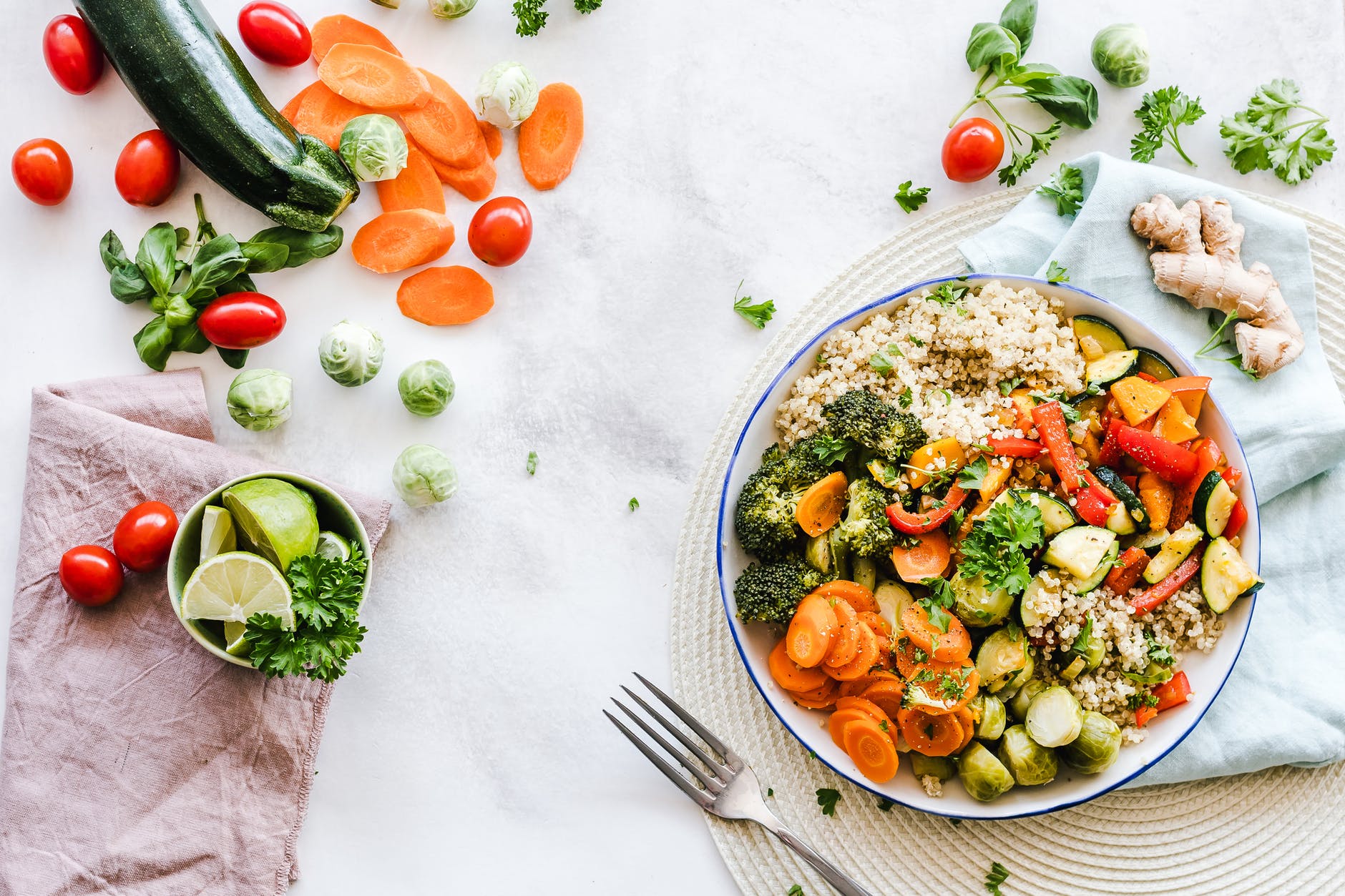
    Foto por Ella Olsson em Pexels.com

    It may seem obvious, but including fruits and vegetables in your daily diet can bring a number of benefits to your health and muscle mass gain.

    Fruits and vegetables have the minerals and vitamins your body needs to function well and are also rich in antioxidants. These antioxidants protect you from various diseases.

    Check out some of the main reasons they are on this list.

    Fiber Source
    Excellent source of fiber which is good for healthy digestion. They also help in lowering your cholesterol. Eating veggies will keep you full, helping you to reduce your cravings for junk food at off-hours. This will automatically, in turn, help you lose weight.

    Vitamins and Minerals
    You should include vegetables in your diet because they provide many micronutrients, which are nutrients necessary for the maintenance of the body, although they are required in small amounts, from milligrams to micrograms.

    This group includes vitamins and minerals. They are critical to your health, including: potassium, which helps maintain healthy blood pressure; calcium, which is important for pregnant women; vitamin A, excellent for the eyes; and vitamin C, which helps with iron absorption.

    Low in fat and Calories
    As fruits and vegetables are low in fat and calories, they help in maintaining a healthy weight. For example, if you consume 400 calories from foods that contain oil, it won’t make you feel full – you’ll be hungrier.

    But if you fill your stomach with 400 calories from vegetables, your stomach will be filled with nutrient-dense foods, leaving little room for other foods to be consumed and feeling full. That’s why it’s important to consume vegetables for weight management and as part of a healthy diet.

    You can eat your vegetables raw, cooked, frozen or canned. However, it is better to eat them fresh (eg salads), as they retain their nutritional composition.

  • 5 alimentos que são essenciais para hipertrofia, mas não são fontes de proteína

    5 alimentos que são essenciais para hipertrofia, mas não são fontes de proteína

    Não é só com proteína que se constrói músculos. Confira 5 alimentos que não são fontes deste nutriente mas são essenciais para quem objetiva hipertrofia.

    Ganhar massa magra não é uma tarefa das mais fáceis. É preciso combinar treino e dieta com muita dedicação, disciplina e conhecimento.

    Quando o assunto é ganhar músculos, a maioria das pessoas foca única e exclusivamente na proteína, deixando outros macro e micronutrientes de lado.

    Isso é um grande erro – sem atenção aos outros nutrientes, dificilmente você vai ganhar massa.

    Por exemplo, se não consumir gordura e carboidrato, seu organismo usará seus músculos como fonte de energia, fazendo com que você perca tudo que conquistou.

    Por isso, separei aqui uma lista com alguns alimentos que não são primeiramente fontes de proteínas, mas vão te ajudar a ganhar massa magra.

    1- Abacate

    O abacate acrescenta calorias saudáveis à sua dieta, o que vai te ajudar a atingir sua meta calórica diária de uma forma positiva.

    E se você quer crescer, essa meta é, provavelmente, muito alta.

    Além disso, essa fruta é rica em gorduras boas, que são essenciais não só para a hipertrofia, como para a queima de gordura, como já falei nesse post aqui.

    O abacate ainda é rico em potássio e vários outros nutrientes essenciais para quem treina.

    Apenas lembre que, como é calórico, deve ser consumido com atenção, sem exageros.

    2- Quinoa

    Apesar de não pertencer à família das gramíneas, a quinoa, originária da América do Sul e cultivada, principalmente, na região dos Andes, é classificada como alimento pseudocereal por apresentar características semelhantes às dos cereais. Tem alto teor de amido (de 52% a 60%, do peso do grão) e excelente qualidade proteica. Estudos têm demonstrado que a quinoa é um dos poucos alimentos vegetais que fornecem uma composição equilibrada dos aminoácidos essenciais. Os aminoácidos essenciais são aqueles que o organismo não é capaz de sintetizar (produzir) e, por isso, devem ser incluídos na dieta.   

    Além disso, a quinoa é considerado um dos alimentos mais completos e balanceados e se destaca pelo alto valor nutricional, rica em proteína de alta digestibilidade, alto teor de lipídio, principalmente ácidos graxos insaturados, vitaminas E e C, vitaminas do complexo B e minerais como potássio, cálcio, magnésio, fósforo, ferro e zinco.

    Por ter baixo índice glicêmico e ser um rico em fibra, a quinoa estimula a mastigação, diminui o esvaziamento gástrico e aumenta a sensação de saciedade, adiando a fome. Dessa forma, pode ser usada em planos alimentares e incluída na alimentação diária, ajudando na promoção de hábitos alimentares saudáveis.

    Como consumir

    A quinoa pode ser consumida na forma de farinha, flocos ou grãos. Os grãos podem ser usados ​​na produção de alimentos e também serem consumidos de forma semelhante ao arroz cozido, ou em sopas, iogurte e saladas, ou moídas como farinha.

    A sugestão é lavar a quinoa grão em água fria e, sempre que possível, comer cozida, pois reduz o teor de fitatos e saponinas, e facilita o processo digestivo.

    Dicas:

    • Os grãos devem ser lavados antes de consumidos para retirar as saponinas, que ficam na camada externa do grão, conferindo sabor amargo

    • A quinoa geralmente cozinha entre 15 e 20 minutos. Então, para melhor aproveitamento dos seus nutrientes, coloque pouca água para cocção

    • No uso doméstico, a forma mais consumida do grão é cozido em água, utilizando o mesmo método de preparação do arroz, podendo ser temperado antes ou após o cozimento, e pode, também, ser acrescentado em saladas, sopas e molhos

    • A farinha derivada do grão pode ser utilizada na preparação de mingaus, pudins, pães, panquecas, biscoitos e bebidas

    • A quinoa em flocos pode ser consumida com frutas, em saladas ou acrescentadas em sucos

    • Evite comer  quinoa crua e em excesso, pois pode causar flatulência e desconforto abdominal(devido às fibras), e pode reduzir a absorção de ferro e zinco (devido a presença de fatores antinutricionais, como fitatos)

    3- Leguminosas

    As leguminosas como feijão e lentilha também têm boas doses de proteína.

    Em uma quantidade menor quando comparada com as carnes e aos ovos, mas o suficiente para dar um up na ingestão desse macronutriente.

    Além disso, esse tipo de alimento é rico em fibras, o que vai melhorar o funcionamento do seu sistema gastrointestinal.

    Para completar, são ricos em vitaminas e minerais fundamentais para a saúde e, mais ainda, para o organismo de um atleta.

    Vitamina E, ferro e magnésio, que são fundamentais à função muscular, estão lá.

    4- Batatas

    As batatas são muito consumidas por quem treina e deseja ganhar massa muscular, pois é uma fonte de carboidrato muito fácil de consumir. O consumo de carboidratos é muito importante porque é a principal fonte de energia e principalmente para quem deseja ganhar massa muscular.

    Ajuda a elevar o consumo calórico, evita o estado catabólico e favorece a liberação de insulina – hormônio anabólico e responsável pela entrada de nutrientes nas celular.

    As batatas possuem boas propriedades nutricionais: como grande quantidade de água, fibra alimentar e é uma importante fonte de carboidratos para o dia a dia. Além disso, contém vitaminas, potássio, cálcio, ferro, magnésio, manganês e zinco.

    5- Frutas e Vegetais

    Pode parecer óbvio, mas a inclusão de frutas e vegetais em sua dieta diária alimentar pode trazer uma série de benefícios para sua saúde e para o seu ganho de massa muscular.

    Frutas e vegetais possuem os minerais e vitaminas que seu corpo precisa para funcionar bem e também são ricos em antioxidantes. Esses antioxidantes o protegem de diversas doenças.

    Confira alguns dos principais motivos deles estarem nessa lista.

    Fonte de fibras

    Excelente fonte de fibra, o que é bom para a digestão saudável. Eles também ajudam na redução de seu colesterol. Comer vegetais irá mantê-lo saciado, ajudando-o a reduzir a sua vontade de comer “besteira” fora de hora. Automaticamente isso irá, por sua vez, ajudá-lo na perda de peso.

    Vitaminas e minerais

    Você deve incluir vegetais em sua dieta porque eles fornecem muitos micronutrientes, que são nutrientes necessários para a manutenção do organismo, embora sejam requeridos em pequenas quantidades, de miligramas a microgramas.

    Fazem parte desse grupo: as vitaminas e os minerais. Eles são fundamentais para sua saúde, incluindo: potássio, o que ajuda na manutenção de uma pressão sanguínea saudável; cálcio, que é importante para as mulheres grávidas; vitamina A, excelente para os olhos; e vitamina C, que ajuda na absorção de ferro.

    Baixo em gorduras e calorias

    Como frutas e vegetais são baixos em gorduras e calorias, eles ajudam na manutenção de um peso saudável. Por exemplo, se você consumir 400 calorias de alimentos que possuam óleo, não o deixará saciado – você ficará com mais fome.

    Mas se você preencher o estômago com 400 calorias de vegetais, seu estômago ficará repleto de alimentos ricos em nutrientes, deixando pouco espaço para que outros alimentos sejam consumidos e com a sensação de saciedade. Por isso que é importante consumir vegetais para o controle de peso e como parte de uma dieta saudável.

    Você pode comer seus vegetais crus, cozidos, congelados ou enlatados. No entanto, é melhor comê-los frescos (ex: saladas), pois conservam sua composição nutricional.